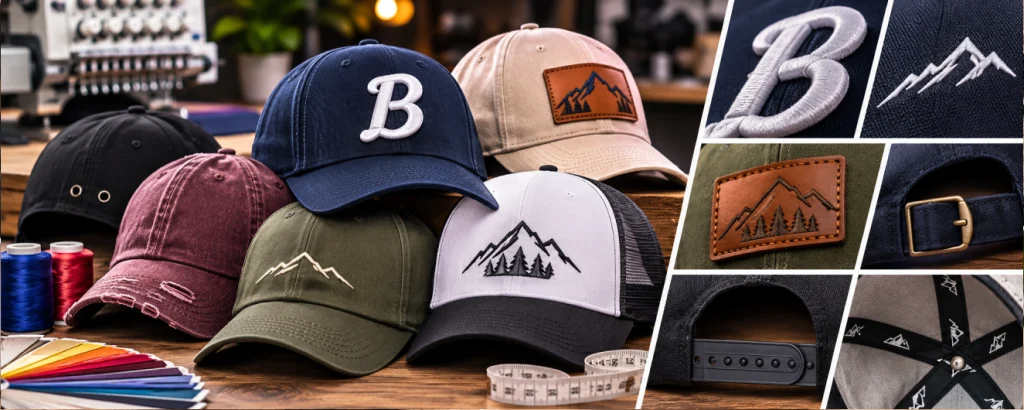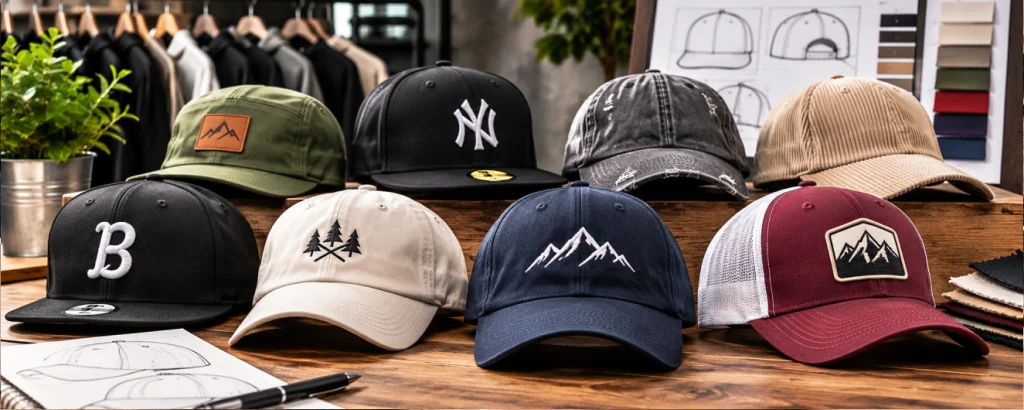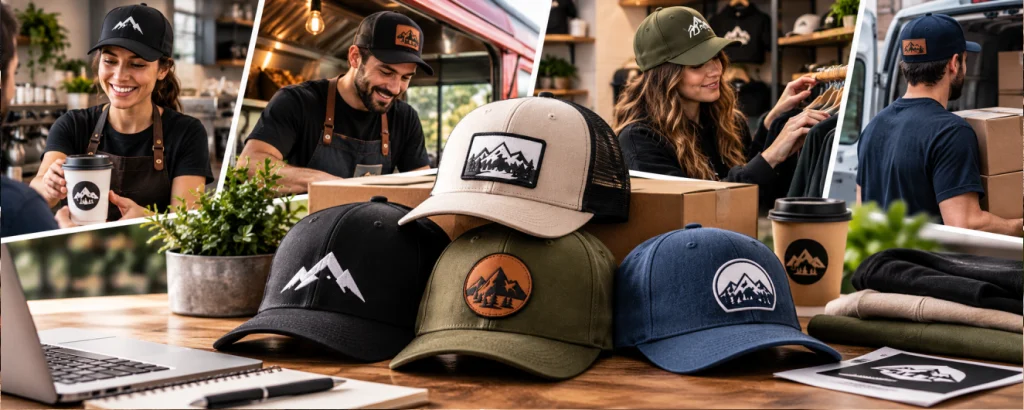

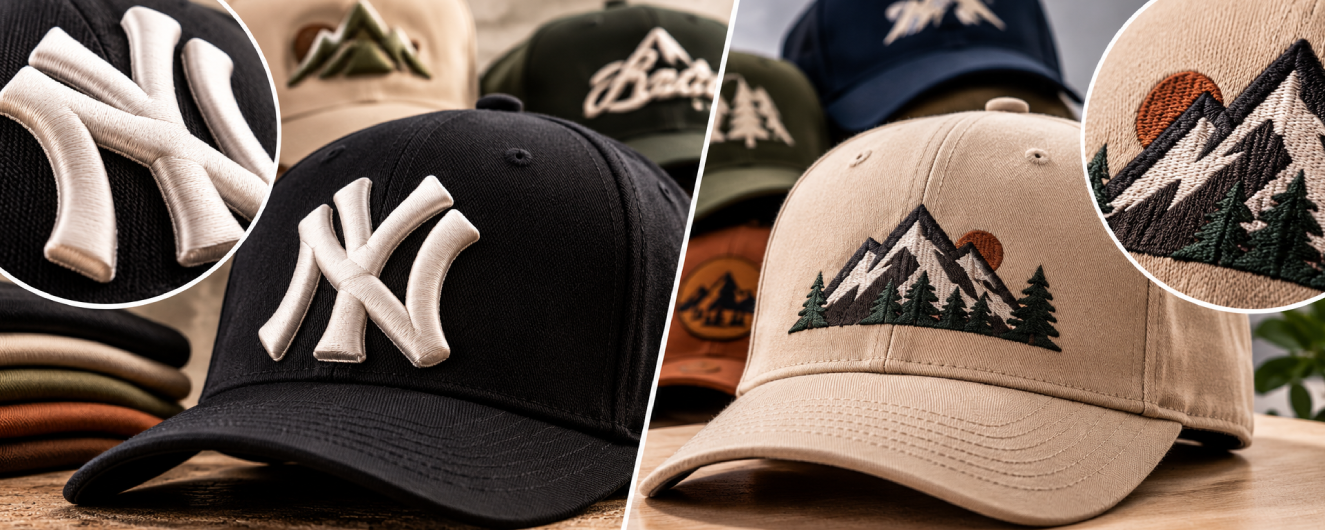
Custom caps have become an essential part of modern fashion, business branding, sportswear, promotional merchandise, and everyday style. Whether you are launching a clothing brand, promoting your business, creating team uniforms, or designing personalised headwear, choosing the right embroidery technique can make a significant difference to the final appearance of your caps.
Two of the most popular decoration methods in the custom headwear industry are 3D puff embroidery and flat embroidery. Both techniques offer excellent opportunities to customise caps, but they create completely different visual effects. One produces bold, raised lettering that stands out from the fabric, while the other delivers a smooth, detailed, and professional finish.
So, which technique should you choose for your custom caps?
The answer depends on your logo, design complexity, cap style, branding goals, and the overall appearance you want to achieve. Understanding the differences between these embroidery methods will help you make a better decision and create headwear that represents your brand effectively.
At Custom Caps Maker, we understand that every custom cap design has its own requirements. The right embroidery method can transform an ordinary cap into a distinctive branded product. In this guide, we will explore how 3D puff embroidery and flat embroidery work, compare their benefits, explain their limitations, and help you decide which option is best for your next custom cap order.
What Is 3D Puff Embroidery?
3D puff embroidery is a specialised embroidery technique that creates a raised, three-dimensional effect on the surface of a cap. Unlike traditional embroidery, where stitches sit relatively flat against the fabric, this technique uses a layer of embroidery foam underneath the thread.
The foam creates additional height, allowing selected parts of a logo, lettering, or design to stand out from the cap’s front panel.
This technique is particularly popular in streetwear fashion, sports merchandise, team caps, promotional headwear, and premium clothing collections. It gives custom caps a bold appearance and helps logos attract attention.
How Does 3D Puff Embroidery Work?
The process involves several important steps to achieve a clean and professional finish.
1. Preparing the artwork
The first step is preparing the logo or design. The artwork must be suitable for raised embroidery. Thick lettering, bold shapes, and simple graphics generally produce better results than complicated illustrations or extremely thin lines.
2. Digitising the design
The artwork is converted into a specialised embroidery file. This process determines the stitch direction, density, sequence, and placement required to create the desired effect.
3. Applying embroidery foam
A suitable foam layer is positioned over the selected area of the cap. The foam provides the structure needed to create the raised appearance.
4. Stitching over the foam
The embroidery machine stitches over the foam, covering it with thread. Carefully planned stitching helps create defined edges and prevents unwanted foam from remaining visible.
5. Removing excess foam
After stitching is completed, the excess foam is removed, leaving the embroidered design raised above the fabric.
The finished result is a textured logo with noticeable depth and dimension.
Benefits of 3D Puff Embroidery
3D puff embroidery offers several advantages for brands and businesses looking to create distinctive custom headwear.
- Bold appearance: Raised lettering makes your logo more noticeable and visually striking.
- Premium presentation: The added dimension can give caps a high-end retail appearance.
- Excellent branding opportunity: It helps businesses create memorable branded merchandise.
- Streetwear appeal: It is particularly suitable for modern fashion brands and urban clothing collections.
- Distinctive texture: The raised stitching creates a physical texture that customers can see and feel.
- Strong visual identity: Bold embroidered designs can help your brand stand out from competitors.
For example, a clothing brand using large initials on the front of a structured snapback can benefit significantly from 3D puff embroidery. The raised lettering creates a stronger visual impact and gives the cap a distinctive personality.
Best Designs for 3D Puff Embroidery
Not every design is suitable for raised embroidery. The best results usually come from artwork with sufficient thickness, spacing, and clearly defined shapes.
Some excellent examples include:
- Large brand initials and monograms.
- Bold company names.
- Sports team logos.
- Athletic numbers and lettering.
- Simple geometric symbols.
- Large block-style typography.
- Streetwear and fashion logos.
If your design contains extremely small lettering, thin outlines, or complicated details, flat embroidery may be a better alternative.
What Is Flat Embroidery?
Flat embroidery is a traditional and widely used embroidery technique in which thread is stitched directly onto the surface of the cap without using foam underneath.
The stitches create a smooth design that follows the shape of the fabric. Unlike 3D puff embroidery, the finished artwork does not have a noticeably raised appearance.
Flat embroidery is one of the most versatile options for custom caps because it can accommodate a wide range of artwork styles, including lettering, symbols, detailed logos, and multicolour designs.
It is commonly used for corporate headwear, promotional caps, sports uniforms, retail merchandise, personalised gifts, and everyday fashion accessories.
How Does Flat Embroidery Work?
The flat embroidery process involves several stages to ensure that the final design looks clean, balanced, and professional.
1. Artwork preparation
The original logo or design is reviewed to determine its size, colours, lettering, and placement.
2. Embroidery digitising
The artwork is converted into an embroidery machine file. The digitising process determines the stitch types, stitch directions, density, and sequence.
3. Positioning the cap
The cap is carefully secured in an embroidery frame or suitable cap hoop to keep the fabric stable during production.
4. Direct stitching
The embroidery machine stitches the design directly onto the cap using the selected thread colours.
5. Finishing and inspection
The finished embroidery is checked for alignment, thread coverage, loose threads, and overall appearance.
The result is a smooth, durable embroidered design that becomes part of the cap’s fabric surface.
Benefits of Flat Embroidery
Flat embroidery remains a popular choice for many types of custom headwear because of its versatility.
- Detailed designs: It is generally more suitable for artwork containing smaller elements and finer lines.
- Professional finish: The smooth appearance works well for businesses, organisations, and corporate branding.
- Multicolour flexibility: Different thread colours can be used to reproduce a wide variety of designs.
- Versatile application: It can be used on many cap styles, depending on their fabric and construction.
- Clean appearance: The stitches sit close to the fabric, creating a neat and understated finish.
- Suitable for smaller logos: It is often a better choice for names, initials, and compact branding elements.
Flat embroidery is particularly useful when a business wants its logo reproduced accurately without adding extra height or texture.
For example, a company ordering custom baseball caps for its employees may prefer flat embroidery because it creates a neat and professional appearance suitable for everyday workplace use.
Best Designs for Flat Embroidery
Flat embroidery works well with a broad range of design styles, including:
- Detailed company logos.
- Small business names.
- Fine lettering and typography.
- Multicolour artwork.
- Sports club emblems.
- Personalised initials.
- Minimalist brand symbols.
- Small side and back cap designs.
It is also useful when the logo includes multiple elements that need to remain clearly distinguishable.
3D Puff Embroidery vs Flat Embroidery: Main Differences
Although both techniques use embroidery thread and specialised machinery, their construction and final appearance are different.
Understanding these differences makes it easier to select the right decoration method for your custom headwear.
| Feature | 3D Puff Embroidery | Flat Embroidery |
|---|---|---|
| Appearance | Raised and dimensional | Smooth and level |
| Construction | Uses embroidery foam | Stitched directly onto fabric |
| Texture | Thick and prominent | Fine and traditional |
| Design suitability | Bold and simple artwork | Detailed and varied artwork |
| Small lettering | Usually less suitable | Generally more suitable |
| Visual impact | Strong and noticeable | Clean and professional |
| Production | Requires additional preparation | Usually more straightforward |
| Best applications | Snapbacks and structured caps | Baseball caps and corporate headwear |
| Branding style | Bold and modern | Classic and versatile |
| Cost | Can be higher | Often more economical |
The most important difference is the type of artwork each technique can reproduce effectively.
3D puff embroidery is designed to create height and dimension, whereas flat embroidery focuses on reproducing designs with a smooth and detailed finish.
Neither option is automatically better. The right choice depends on the requirements of your project.
1. Which Embroidery Technique Looks More Premium?
The appearance of your custom caps plays an important role in how customers perceive your brand.
3D puff embroidery is often associated with premium streetwear, sports fashion, and bold retail headwear. Its raised texture gives logos a noticeable presence and creates a distinctive look.
For fashion brands that want their caps to become an important part of their clothing collection, this technique can be an excellent choice.
Flat embroidery offers a different type of premium appearance. Its clean stitching and precise detailing create a refined finish that works particularly well for corporate merchandise, minimalist fashion, and professional branding.
A simple embroidered logo on a high-quality cap can look just as sophisticated as a raised design.
Our recommendation: Choose 3D puff embroidery if you want bold, raised branding. Choose flat embroidery if your priority is clean detailing and a classic appearance.
2. Which Option Is Better for Detailed Logos?
Logo clarity is essential when creating branded merchandise. Your customers should be able to recognise your business name, symbol, or artwork without difficulty.
Flat embroidery generally offers greater flexibility when working with complicated logos.
It can reproduce smaller design elements, multiple colours, fine outlines, and different lettering styles more effectively than raised embroidery.
3D puff embroidery requires thicker stitching areas to cover the foam properly. Very small details and narrow gaps may become difficult to reproduce clearly.
For example, imagine your logo contains:
- A large company name.
- A small slogan underneath.
- A detailed circular symbol.
- Several fine outlines.
- Multiple colours.
Using flat embroidery for the complete design may produce a cleaner result.
However, if your logo consists of large block letters or simple initials, 3D puff embroidery could create a much stronger effect.
The important thing is to select the technique according to the artwork rather than choosing a method simply because it looks fashionable.
3. Which Embroidery Technique Is More Durable?
Durability is another important consideration when ordering custom caps.
Both flat embroidery and 3D puff embroidery can provide long-lasting decoration when produced correctly using suitable materials and professional embroidery techniques.
Flat embroidery has a relatively straightforward construction because the thread is stitched directly onto the fabric. With appropriate thread quality, stitch density, and finishing, it can withstand regular everyday use.
3D puff embroidery can also be durable, but its raised structure requires additional attention during production and care.
The foam underneath the stitching must be properly covered, and the edges need to be finished correctly. Poorly executed puff embroidery may expose foam or lose its clean shape.
Tips for Maintaining Embroidered Caps
To help keep your custom embroidered caps looking their best:
- Avoid excessive washing and unnecessary soaking.
- Follow the care instructions provided for the cap material.
- Avoid harsh chemicals and bleach.
- Allow caps to air dry naturally.
- Do not pull or scratch the embroidered area.
- Store caps away from excessive heat and moisture.
- Avoid crushing the front panel of structured caps.
Proper care helps maintain the appearance of both embroidery styles over time.
4. Which Is More Affordable: 3D Puff or Flat Embroidery?
Budget is an important factor for businesses, clothing brands, sports teams, and organisations ordering custom caps in bulk.
In many cases, flat embroidery is more economical because it does not require embroidery foam or some of the additional preparation involved in raised embroidery.
3D puff embroidery may cost more because it requires foam, specialised digitising, additional production steps, and careful finishing.
However, the final price depends on several factors:
- Number of caps ordered.
- Logo dimensions.
- Number of thread colours.
- Stitch count and design complexity.
- Embroidery placement.
- Type and quality of cap.
- Production requirements.
For larger orders, the cost per cap may also vary depending on the quantity and manufacturing specifications.
It is worth remembering that the cheapest decoration option is not always the best investment. If raised embroidery is essential to your brand identity, the additional cost may be worthwhile.
Similarly, if your logo contains intricate details, choosing flat embroidery can help avoid unnecessary production complications.
At Custom Caps Maker, the best starting point is to evaluate your artwork and determine which embroidery method suits your design requirements.
5. Which Cap Styles Work Best With 3D Puff Embroidery?
The structure of a cap can influence how well raised embroidery performs.
3D puff embroidery generally works best on caps with firm, structured front panels because they provide better support for the foam and stitching.
Some popular cap styles include:
Structured Baseball Caps
Structured baseball caps are a classic choice for businesses, sports teams, and clothing brands.
Their reinforced front panels help support bold lettering and raised logos.
Snapback Caps
Custom snapback caps are especially popular in streetwear and urban fashion.
Their structured crowns and flat brims provide an excellent base for large 3D puff designs, particularly bold initials and brand names.
Trucker Caps
Custom trucker caps combine a structured front panel with breathable mesh at the back.
They are popular for lifestyle brands, outdoor businesses, promotional merchandise, and casual fashion collections.
Flat-Brim Caps
Flat-brim caps offer a modern appearance that works particularly well with raised lettering and bold front-panel logos.
They are frequently used for fashion merchandise and streetwear collections.
The suitability of each style depends on the front-panel construction, fabric, logo dimensions, and embroidery specifications.
6. Which Cap Styles Are Better for Flat Embroidery?
Flat embroidery is suitable for a wider range of cap designs because it does not rely on foam to create its visual effect.
It can work particularly well on the following styles.
Dad Hats
Dad hats usually have a softer and less structured construction.
Flat embroidery complements their relaxed appearance and is an excellent choice for small logos, initials, and minimalist designs.
Classic Baseball Caps
Baseball caps are versatile and suitable for personal branding, uniforms, sports merchandise, and promotional products.
Flat embroidery can create a professional finish while maintaining the traditional appearance of the cap.
Unstructured Caps
Unstructured caps feature softer front panels without the same level of reinforcement found in structured designs.
Flat embroidery is generally a more suitable option for this construction because it does not require a raised foam layer.
Performance Caps
Performance caps are often made from lightweight technical fabrics.
Flat embroidery may be suitable, but the fabric, backing, and stabilisation requirements should be checked before production.
The right technique will depend on the material and construction of the selected cap.
7. Can You Combine 3D Puff and Flat Embroidery on One Cap?
Yes! Combining both embroidery techniques can create an attractive and distinctive custom cap design.
This approach is particularly useful for businesses and fashion brands that want to achieve a balance between bold branding and detailed artwork.
For example, consider a custom cap with the following decoration:
- Large brand initials in 3D puff embroidery on the front.
- A small company slogan in flat embroidery underneath.
- A secondary logo embroidered on the side.
- A personalised name or website on the back.
This combination allows the main logo to stand out while keeping the smaller details clear and readable.
Another popular option is to use raised lettering with flat embroidered outlines or supporting elements.
However, the design must be digitised specifically for the selected embroidery techniques. Not every design can be converted directly into a combination of raised and flat stitching.
The production team should review the artwork, placement, spacing, and cap construction before confirming the final method.
8. How to Choose the Right Embroidery for Your Business
If you are ordering custom caps for your business, your decoration choice should reflect your brand identity.
Different businesses have different requirements, and the best embroidery technique depends on how you intend to use your headwear.
For Clothing and Streetwear Brands
3D puff embroidery is an excellent option for fashion labels that want bold branding and distinctive front-panel designs.
Large initials, short brand names, and strong typography can create an eye-catching appearance.
For Corporate Businesses
Flat embroidery is often a practical choice for corporate headwear.
It provides a neat and professional finish that works well for employee uniforms, company merchandise, and promotional campaigns.
For Sports Teams
Both techniques can work well for sports teams.
3D puff embroidery is suitable for bold team names and initials, while flat embroidery is better for detailed crests, smaller text, and additional design elements.
For Promotional Merchandise
Flat embroidery can be an economical option for straightforward promotional designs, particularly when ordering larger quantities.
However, 3D puff embroidery may be more suitable when the objective is to create distinctive merchandise that attracts attention.
For Outdoor and Lifestyle Brands
The choice depends on the brand’s personality.
A bold outdoor clothing brand may prefer raised embroidery, while a heritage-inspired brand may prefer a clean, understated flat embroidered logo.
9. Important Design Tips Before Ordering Custom Embroidered Caps
Choosing the right embroidery technique is only one part of the custom cap production process.
Your artwork, thread colours, cap material, logo dimensions, and placement all influence the final result.
Here are some important tips to consider before placing your order.
Keep Your Logo Suitable for the Embroidery Method
If you want 3D puff embroidery, use bold lettering and simple shapes wherever possible.
For flat embroidery, you have more flexibility to include smaller design elements, although extremely fine details may still need adjustment.
Choose the Correct Logo Size
A logo that looks perfect on a computer screen may not look the same when stitched onto a small cap panel.
Always consider the available embroidery area and the proportions of the cap.
Select Appropriate Thread Colours
Thread colours should complement the cap fabric and maintain sufficient contrast.
For example, white embroidery on a black cap creates a strong contrast, while black thread on a black cap produces a subtle, minimalist appearance.
Consider the Cap Fabric
Different materials behave differently during embroidery.
Cotton twill, polyester, canvas, and other cap fabrics may require different stabilisation and stitching approaches.
Think About Logo Placement
The front panel is the most common location for a main logo, but additional embroidery can also be placed on the side or back of suitable caps.
Consider how each placement contributes to the overall appearance.
Request a Mockup or Sample
Before proceeding with a bulk order, reviewing a digital mockup or physical sample can help you understand how your design will look on the finished cap.
A physical sample is particularly useful for checking embroidery height, stitch quality, colour accuracy, and placement.
10. Common Mistakes to Avoid When Choosing Embroidery
Even an excellent logo can lose its impact if the wrong decoration method is selected.
Avoid these common mistakes when planning your custom headwear.
Choosing 3D puff for extremely small text
Tiny lettering may not have sufficient width to cover the foam properly. Flat embroidery is generally more appropriate for small text.
Using complicated artwork for raised embroidery
Detailed illustrations and thin outlines can lose clarity when converted into raised stitching. Simplifying the design may produce a better result.
Ignoring the cap structure
Soft and unstructured caps may not provide the support needed for a clean raised design.
Selecting colours without considering contrast
Thread colours that closely match the cap fabric may make important parts of your logo difficult to see.
Not checking the final logo dimensions
A design should always be reviewed at its actual embroidery size, not just at its original digital dimensions.
Skipping sample approval
A digital image provides a useful preview, but an approved physical sample offers a better understanding of the actual embroidery quality.
Taking time to review these details can help prevent unnecessary adjustments during production.
11. Why Custom Embroidered Caps Are a Great Investment for Brands
Custom embroidered caps are more than fashion accessories. They can become an important part of your company’s visual identity.
Businesses across Canada use branded caps for employee uniforms, promotional events, customer giveaways, retail merchandise, and marketing campaigns.
Here are some reasons why custom embroidered headwear remains a valuable branding option.
Builds Brand Recognition
A professionally embroidered logo makes your business more recognisable.
When employees, customers, or brand representatives wear your caps, your logo becomes visible in everyday environments.
Creates a Professional Appearance
Matching embroidered caps can give teams and employees a coordinated appearance.
This is particularly useful for retail stores, restaurants, construction companies, sports organisations, and event staff.
Supports Clothing Brand Development
For independent clothing labels, custom caps offer an opportunity to introduce branded accessories alongside other products.
A well-designed cap collection can complement hoodies, T-shirts, jackets, and other apparel.
Offers Long-Term Promotional Value
Unlike some disposable promotional products, quality caps can be worn repeatedly.
This allows your branding to remain visible long after an event or marketing campaign has ended.
Provides Customisation Opportunities
Businesses can choose different cap styles, colours, embroidery techniques, and logo placements to create products that match their brand identity.
Whether you prefer subtle flat embroidery or bold 3D puff designs, custom headwear offers plenty of creative possibilities.
12. The Future of Custom Embroidered Caps
The custom headwear market continues to offer opportunities for businesses, fashion brands, and organisations looking for distinctive products.
Customers increasingly value personalised designs, attractive finishes, and products that reflect their individual style.
Several design directions are particularly relevant to modern custom cap collections.
Minimalist embroidered logos: Small logos, initials, and subtle branding continue to suit everyday fashion and corporate headwear.
Bold 3D lettering: Raised embroidery remains an attractive option for brands looking to create a strong visual identity.
Mixed embroidery techniques: Combining flat and raised stitching provides more flexibility when designing distinctive logos.
Custom colour combinations: Matching thread colours with cap fabrics helps create unique collections.
Personalised details: Names, initials, dates, and additional side or back embroidery can make caps more distinctive.
Premium headwear construction: Fabric quality, structured crowns, comfortable closures, and carefully finished embroidery all contribute to the overall product experience.
For businesses planning a new headwear collection, selecting the right embroidery method is an important step towards creating products that customers will enjoy wearing.
13. Why Choose Custom Caps Maker for Your Custom Headwear?
Creating quality custom caps requires more than simply placing a logo on a piece of fabric. Every detail matters, from the original artwork and cap construction to embroidery placement and final finishing.
At Custom Caps Maker, our goal is to help businesses, clothing brands, sports teams, and organisations bring their custom headwear ideas to life.
Whether you are interested in bold 3D puff embroidery or traditional flat embroidery, choosing the right decoration method is essential to achieving the appearance you want.
Custom headwear offers opportunities to personalise:
- Baseball caps.
- Snapback caps.
- Trucker hats.
- Flat-brim caps.
- Dad hats.
- Structured and unstructured caps.
- Corporate and promotional headwear.
You can explore different logo styles, thread colours, cap designs, and embroidery placements to create headwear that reflects your brand.
Whether you need a small collection for your clothing label or branded caps for a business promotion, planning the design carefully will help you achieve a better final product.
Ready to create your own custom embroidered caps?
Visit Custom Caps Maker to explore custom headwear possibilities and discuss your next project.
Frequently Asked Questions (FAQs)
1. What is the main difference between 3D puff embroidery and flat embroidery?
The main difference is the appearance and construction. 3D puff embroidery uses foam underneath the stitching to create a raised effect, while flat embroidery stitches thread directly onto the fabric to produce a smooth finish.
2. Is 3D puff embroidery better than flat embroidery?
Neither technique is universally better. 3D puff embroidery is ideal for bold logos, large lettering, and simple shapes. Flat embroidery is generally better for detailed designs, smaller text, and multicolour artwork.
3. Does 3D puff embroidery last longer than flat embroidery?
Not necessarily. Both techniques can be durable when produced correctly. The quality of the thread, digitising, stitching, materials, and finishing plays an important role in the lifespan of the embroidery.
4. Is 3D puff embroidery more expensive?
It can be more expensive because it requires foam and additional production steps. However, the final price depends on the artwork, stitch count, quantity, cap material, and production specifications.
5. Can small logos be made using 3D puff embroidery?
Small logos may be possible, but designs containing very thin lines or tiny lettering are generally not suitable for raised embroidery. The artwork should be reviewed and tested at its intended production size.
6. Can flat embroidery be used on all types of caps?
Flat embroidery is suitable for many cap styles, including baseball caps, dad hats, snapbacks, and trucker hats. However, compatibility depends on the fabric, construction, embroidery area, and stabilisation requirements.
7. Can I combine 3D puff and flat embroidery on one cap?
Yes. You can combine both techniques in one overall design, provided the artwork and production setup support it. For example, large front lettering can be raised while smaller supporting details are stitched flat.
8. Which embroidery is best for business logos?
Flat embroidery is often suitable for detailed business logos, smaller text, and professional uniforms. However, a simple and bold company logo may look excellent with 3D puff embroidery.
9. Is 3D puff embroidery suitable for snapback caps?
Yes. Structured snapback caps are among the most popular choices for 3D puff embroidery because their firm front panels provide suitable support for raised stitching.
10. Can I add embroidery to the side and back of custom caps?
Yes, side and back embroidery can be added to many cap styles, depending on the available space and construction. Flat embroidery is generally a practical choice for smaller side and back designs.
11. What artwork file should I provide for custom embroidery?
A high-quality vector file, such as AI, EPS, or SVG, is a useful starting point. High-resolution PNG files may also help with artwork review. The design will generally need to be digitised into an embroidery machine-compatible format before production.
12. Can I order custom embroidered caps in bulk?
Yes. Custom embroidered caps are commonly produced for clothing brands, businesses, promotional campaigns, sports teams, and organisations. Your required quantity, cap style, artwork, and decoration method should be confirmed before production.
Final Thoughts: Which Embroidery Technique Should You Choose?
Choosing between 3D puff embroidery and flat embroidery comes down to your design goals and the appearance you want your custom caps to achieve.
If you want bold, raised lettering that immediately attracts attention, 3D puff embroidery is an excellent choice. It works particularly well for streetwear brands, sports merchandise, snapbacks, and structured baseball caps.
On the other hand, if your design includes smaller text, intricate details, multiple colours, or a clean professional logo, flat embroidery is generally the better option.
You can also combine both techniques to create a unique design that balances raised branding with detailed stitching.
The most important thing is to select an embroidery method that complements your artwork, cap construction, and brand identity.
At Custom Caps Maker, we believe every custom cap should represent the brand behind it. Whether you are developing your first headwear collection or ordering promotional caps for your business, the right design and embroidery technique can help turn your idea into a distinctive product.
Start designing your custom caps today with Custom Caps Maker and create headwear that makes your brand stand out.
Custom Caps Maker Team
We are the Custom Caps Maker team, a Toronto-based crew of designers and headwear specialists helping businesses, sports teams, schools and brands across Canada create custom caps they are proud to wear. On the blog we share practical guides on cap styles, embroidery, materials, colours and bulk ordering.